Cartographies culinaires
Descriptif du projet mené par Grace Gloria Denis
STATEMENT
Cartographies Culinaires met en œuvre la notion de pédagogies sensorielles comme cadre permettant de faire émerger, chez les élèves, une compréhension des systèmes alimentaires à travers une série d’ateliers interactifs. Centré sur les pratiques agroécologiques, le programme associait des approches théoriques et pratiques, favorisant une appropriation collective de principes fondamentaux de l’agroécologie tels que la biodiversité et la résilience. En tissant ensemble ces différents principes et les activités qui leur étaient associées, Cartographies Culinaires a instauré un environnement d’apprentissage favorisant une relation de proximité avec les systèmes alimentaires locaux, tout en développant les compétences écologiques (eco-literacy) des élèves.
Menés en français et en anglais, les ateliers se sont déroulés au sein de l’école Plan Dessus, à Vevey, au printemps 2024. Les classes participantes, composées d’élèves âgés de 14 à 18 ans, faisaient notamment partie de la classe d’alphabétisation et de la classe d’accueil de Plan Dessus.
Les séances ont été conçues de manière à faire directement référence à des principes précis de l’agroécologie, permettant aux élèves d’établir un lien entre les aspects théoriques de cette pratique et leur expérience concrète à travers diverses activités mobilisant des formes de savoir incarné. L’une de ces activités consistait par exemple à cuisiner à l’énergie solaire dans la cour de l’école, permettant d’expérimenter de manière tangible les notions d’efficacité et de stockage de l’énergie. L’ossature pédagogique du projet s’appuie sur les treize principes de l’agroécologie défendus par plus de 800 organisations internationales, qui constituent un socle pour la transformation des systèmes alimentaires à l’échelle locale comme mondiale. En intégrant ces principes, Cartographies Culinaires a créé un contexte propice au développement d’une culture écologique chez les élèves. Le programme s’inspire également du fait que le mot « crise » dérive étymologiquement du grec krisis, qui signifie « décider », avec l’ambition de renforcer chez les élèves la conscience de leur pouvoir d’agir et de leur rôle dans la transformation des systèmes alimentaires.
Au cœur de Cartographies Culinaires se trouve la notion de pédagogies sensorielles, qui prolonge les recherches antérieures de Grace Gloria Denis sur les écologies sonores et sur la capacité de l’écoute à constituer un vecteur de ce que l’anthropologue Anna Tsing appelle les arts of noticing (« les arts de prêter attention »). Le programme s’inscrit dans la continuité de la série Aural Oral, qui explorait les liens intrinsèques entre perceptions sensorielles et pratiques agricoles. S’éloignant d’un travail principalement centré sur l’écoute, le projet élargit son approche sensorielle à des expériences mobilisant également le toucher et le goût. En intégrant les acquis de cette recherche, le programme cherchait à construire avec les élèves une trame de connaissances dynamique, tissant ensemble apprentissages sensoriels et pratiques agricoles. Cette attention portée à l’expérience sensible constitue une alternative aux modes plus conventionnels de transmission des savoirs, reposant essentiellement sur le langage, et visait à rendre les ateliers accessibles à des élèves en cours d’apprentissage de la lecture et de l’écriture en français.
Cartographies Culinaires intégrait également une dimension locale et internationale grâce à la participation d’artistes et de pédagogues basés au Mexique, membres du réseau de l’artiste. Cette perspective internationale a enrichi l’expérience d’apprentissage en exposant les élèves à une diversité de pratiques culturelles et de points de vue liés aux systèmes alimentaires, les invitant à réfléchir au lien fondamental entre l’alimentation et les territoires.
Tout au long du projet, par une série de gestes subtilement articulés, l’accent a été mis sur l’idée que la consommation ne relève pas uniquement d’un acte individuel, mais constitue un phénomène collectif qui participe à la transformation des structures sociales et écologiques. En explorant différentes dimensions de la consommation à travers des activités pratiques, les élèves ont été invités à remettre en question les récits dominants portés par l’industrie agroalimentaire et les solutions technoscientifiques, tout en imaginant d’autres trajectoires privilégiant la durabilité écologique et la justice sociale. Cartographies Culinaires a adopté une approche itérative, chaque atelier s’appuyant sur les acquis des séances précédentes. En reconnaissant la capacité d’agir propre à chaque élève, le projet cherchait à révéler et à développer leur potentiel à devenir des acteurs du changement.
RÉSUMÉ DES SÉANCES
1ère SÉANCE
Pour cette séance d’introduction, les deux classes se sont réunies dans la cuisine de l’école afin d’explorer les principes agroécologiques d’efficacité et de résilience à travers la transformation de produits de saison. L’ensemble des ingrédients provenait de la ferme agroécologique Praz Bonjour, située à Blonay, que les élèves ont visité quelques jours plus tard. Les élèves ont été répartis en petits groupes, chacun travaillant sur un ingrédient différent : fleurs de sureau, radis, trois variétés de menthe, oignons nouveaux et ail. Les ingrédients ont été lavés, transformés puis conservés dans des bocaux en verre, dans une séance consacrée aux techniques de conservation des aliments et à la découverte de la saisonnalité. Dans un second temps, les élèves ont réalisé des étiquettes illustrant le contenu des bocaux et des bouteilles. Parallèlement, ils ont commencé à produire la matière d’un livre de recettes composé d’une série de dessins retraçant les différentes étapes de transformation de chaque ingrédient, plutôt que d’instructions rédigées, même si certains élèves ont choisi d’y ajouter du texte.
2ème SÉANCE
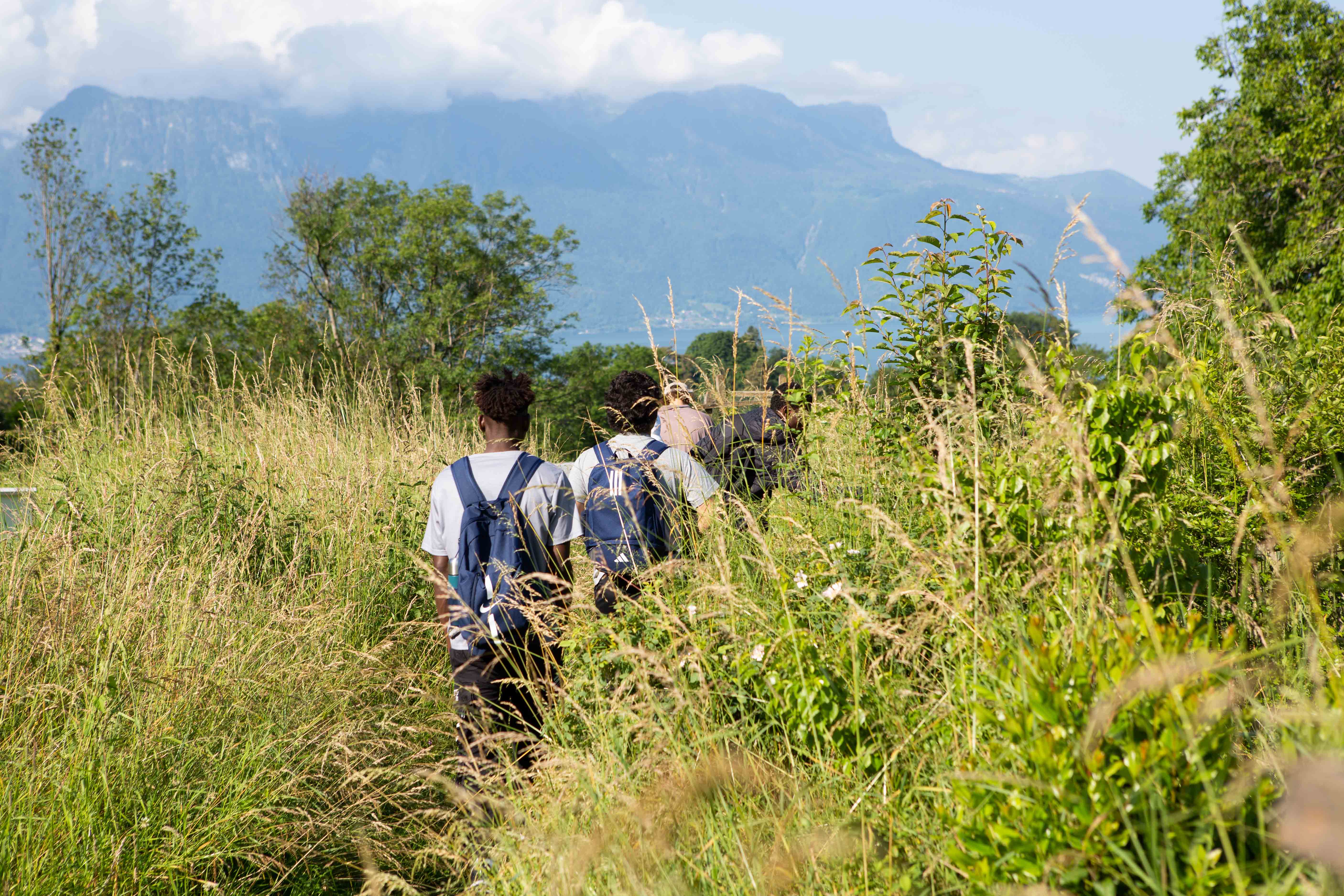
Pour la deuxième séance du programme, la classe d’accueil ACC/6 s’est rendue à la ferme Praz Bonjour. Antoine Meier et Pierre-Gilles Sthioul y ont guidé les élèves à travers une visite présentant les pratiques agricoles de la ferme, son histoire ainsi qu’une introduction à l’agroécologie. Avant la visite, une présentation de l’agriculture biologique ainsi qu’une explication des différences entre monoculture et polyculture a été donnée, suivie d’un temps d’échange. L’activité organisée à Praz Bonjour consistait à fabriquer des seed bombs (bombes à graines), que chaque élève a emportées chez lui avec l’invitation à les semer dans un lieu où il pourrait observer leur développement. Les graines, fournies par la ferme, comprenaient aussi bien des espèces comestibles que non comestibles.
3ème SÉANCE
Cette activité, intitulée Une carte affective des ingrédients, des territoires et des savoirs par Sofia Olascoaga, a permis d'explorer différentes formes de cartographie en prenant divers ingrédients comme point de départ pour examiner les relations dynamiques avec la terre, le goût, l’expérience corporelle, les liens sociaux et affectifs, ainsi que les savoirs ancestraux. Prenant les ingrédients comme point de départ, elle invitait à explorer les relations dynamiques entre les territoires, les saveurs, l’expérience incarnée, les liens sociaux et affectifs, ainsi que les savoirs enracinés. Les élèves étaient guidés à travers une série de questions réflexives afin d’explorer leurs liens personnels avec différents ingrédients, favorisant ainsi la familiarité et la curiosité comme sources de savoirs locaux légitimes. Ces réflexions étaient ensuite partagées sous forme de conversations collectives, à la fois orales et dessinées, afin de construire un réseau complexe d’interconnexions. L’activité prenait la forme d’une sorte de « marché », où une sélection d’ingrédients était disposée et dans laquelle chaque élève choisissait celui qui faisait écho à ses souvenirs et à son idée du foyer. Cette cartographie collective visait à retracer les circulations des ingrédients, à comprendre leurs modes de production et de déplacement, ainsi que leurs liens avec les territoires et les savoirs culturels.
4ème SÉANCE
La quatrième séance du programme reprenait une activité menée plus tôt dans la semaine avec la première classe, sous la forme d’une visite de la ferme Praz Bonjour. Antoine Meier et Pierre-Gilles Sthioul ont accompagné les élèves lors d’une visite guidée consacrée aux pratiques agricoles de la ferme, à son histoire et aux principes de l’agroécologie. Avant le déplacement, une discussion d’introduction présentait les bases de l’agriculture biologique et expliquait les différences entre monoculture et polyculture. À la ferme, les élèves ont participé à un atelier de fabrication de seed bombs (bombes à graines) à partir de graines fournies par la ferme, comprenant des espèces comestibles et non comestibles. Chaque élève est reparti avec sa bombe à graines, invité à la planter puis à observer son évolution.
5ème SÉANCE
La séance a débuté par une expérimentation pratique de cuisson solaire, au cours de laquelle les élèves ont préparé et cuit des biscuits à l’aide de fours solaires. Cette activité visait non seulement à leur faire découvrir une méthode de cuisson durable, mais aussi à les familiariser avec la recette comme forme de transmission et de conservation des savoirs. Pendant la cuisson des biscuits, les élèves ont participé à d’autres activités approfondissant leur compréhension de la durabilité et des principes de l’agroécologie, notamment la plantation de graines dans des pots qu’ils pouvaient choisir d’emporter chez eux. La séance s’est conclue par la sortie des biscuits des fours solaires, offrant un résultat concret illustrant l’application pratique de la cuisson solaire. Cette méthode était mise en relation avec les principes de l’agroécologie en démontrant une approche de préparation des aliments respectueuse de l’environnement, limitant le recours aux sources d’énergie conventionnelles et illustrant l’intégration d’une conscience écologique dans les pratiques quotidiennes.
6ème SÉANCE
La séance finale du programme a réuni les deux classes autour d’une activité collaborative intitulée Bread Archeologies for the Future, animée par Cocina Colaboratorio et inspirée de leur projet Archivo Biocultural, qui explore le patrimoine alimentaire comme manière d’entrer en relation avec les paysages. La séance était centrée sur une pratique traditionnelle consistant à réaliser des sculptures décoratives en pain à partir de dead dough (« pâte morte »), une pâte historiquement utilisée lors de célébrations depuis l’époque de l’Égypte ancienne. Les élèves ont participé à un exercice d’imagination en intégrant, dans leurs sculptures en pain, des symboles représentant la faune, la flore, les champignons ainsi que différents outils proposés par Mariana, de Cocina Colaboratorio. Ces créations réinterprétaient les traditions tout en exprimant leur relation contemporaine au monde vivant. Elles étaient pensées comme des artefacts destinés à transmettre, vers le futur, le patrimoine alimentaire des participant·es ainsi que leur lien avec les paysages.
La séance s’est achevée par une dégustation collective de pain fraîchement cuit accompagné de sirop de fleurs de sureau, offrant un moment convivial pour conclure le programme.
CONTRIBUTION À UNE BOÎTE À OUTILS ÉCOPÉDAGOGIQUE
Semer la diversité : plantes sauvages et cultivées en agroécologie
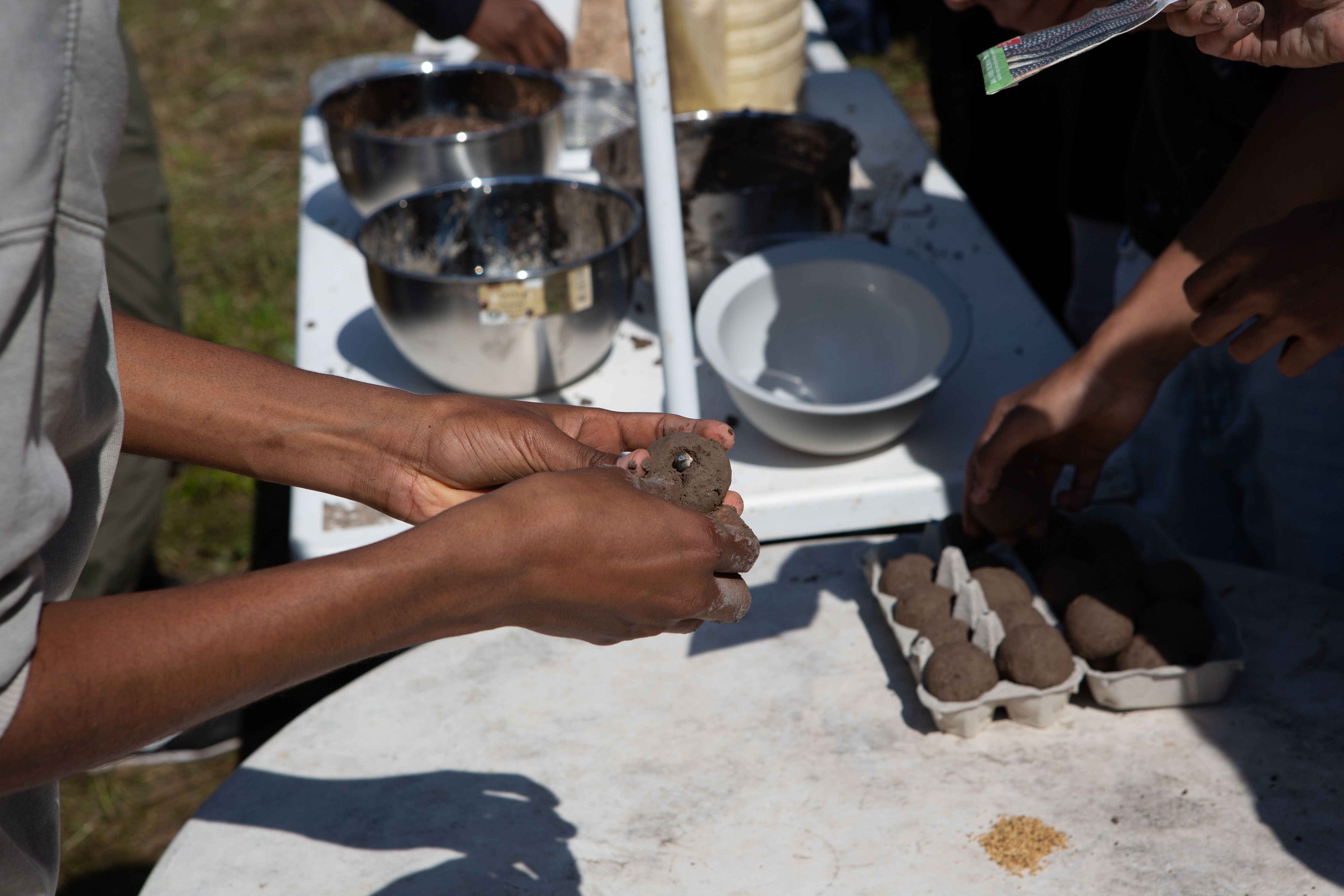
Cette activité initie les élèves aux principaux principes de l’agroécologie en les invitant à fabriquer et à planter des seed bombs (bombes à graines). L’agroécologie met l’accent sur la biodiversité, les pratiques agricoles durables et l’intégration des écosystèmes naturels au sein des systèmes agricoles. Les seed bombs, développées à l’origine comme technique de guérilla jardinière dans les années 1970 et popularisées par des militant·es écologistes comme Liz Christy à New York, tout en s’inspirant des pratiques de l’agriculteur et philosophe japonais Masanobu Fukuoka, étaient utilisées pour réinvestir des espaces urbains délaissés en y introduisant de la végétation selon une méthode efficace et demandant peu d’entretien. À travers cette pratique, les élèves découvrent les bénéfices de la polyculture, le rôle des plantes sauvages et cultivées, ainsi que l’importance de l’équilibre écologique dans les systèmes agricoles.
MATÉRIEL
- Poudre d’argile ou argile naturelle
- Compost ou terre fertile
- Graines adaptées au climat local, idéalement un mélange de plantes comestibles et non comestibles
- Eau
- Un saladier ou un récipient pour le mélange
INSTRUCTIONS
- Rassembler le matériel dans un espace pouvant accueillir un petit groupe d’élèves, idéalement en extérieur.
- Présenter les différents types de graines en insistant sur leur rôle dans le maintien de la biodiversité.
- Mélanger deux parts d’argile, une part de compost et une poignée de graines dans le récipient.
- Ajouter progressivement de l’eau tout en mélangeant jusqu’à obtenir une consistance permettant au mélange de conserver sa forme.
- Façonner le mélange en petites boules de la taille d’une bille.
- Laisser sécher les bombes à graines dans un endroit ombragé pendant 24 à 48 heures avant de les planter.
- Inviter les élèves à planter les bombes à graines dans différents lieux, tels que des jardins, des champs ou des espaces urbains délaissés.
- Demander aux élèves d'observer leur croissance dans le temps, en regardant quelles plantes se développent et comment elles contribuent à l’écosystème environnant.
GENERAL QUESTIONS
- Quels sont les bénéfices de l’intégration de plantes sauvages dans les systèmes agricoles ?
- Comment les plantes sauvages contribuent-elles à la santé des sols, à la lutte contre les ravageurs et au soutien des pollinisateurs ?
- Quels avantages la polyculture présente-t-elle par rapport à la monoculture ?
- Quels principes de l’agroécologie pouvez-vous identifier dans cette activité ?